
Retrack
Redesign of a logistics platform for asset management, traceability and operational flow monitoring.
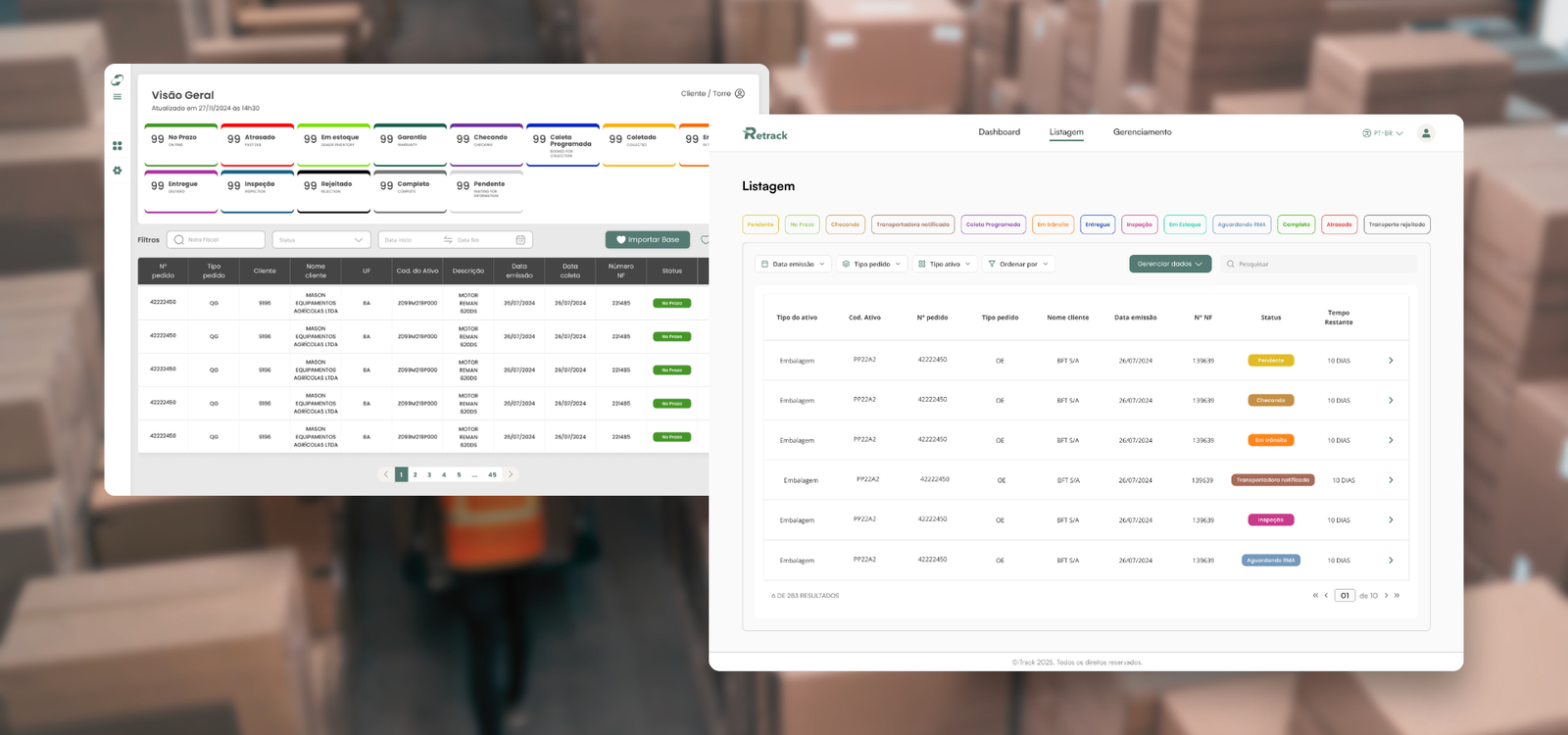
Overview
Retrack is a digital solution developed by iTrack to support companies managing large volumes of assets in circulation, providing greater traceability, automation and operational control throughout the logistics chain.
The project focused on redesigning a complex operational platform, making the experience clearer, more scalable and adaptable to different user profiles and client organizations.
I worked on the platform redesign by analyzing the existing product, understanding operational workflows, mapping user needs, designing interfaces, creating reusable components and adapting the solution to different business contexts.
A logistics operation with multiple stakeholders, stages and responsibilities
Managing asset flows involves different participants, such as control towers, carriers, dealers, customers and internal teams responsible for the operation.
Each user profile needed to access specific information, perform actions at different moments and track asset status throughout the journey.
The challenge
Structuring a highly complex operational system without making the experience overwhelming, confusing or dependent on constant support.
Identifying opportunities to improve the existing experience
The previous platform already supported important operational processes, but presented challenges related to visual organization, hierarchy, scanability and consistency across screens.
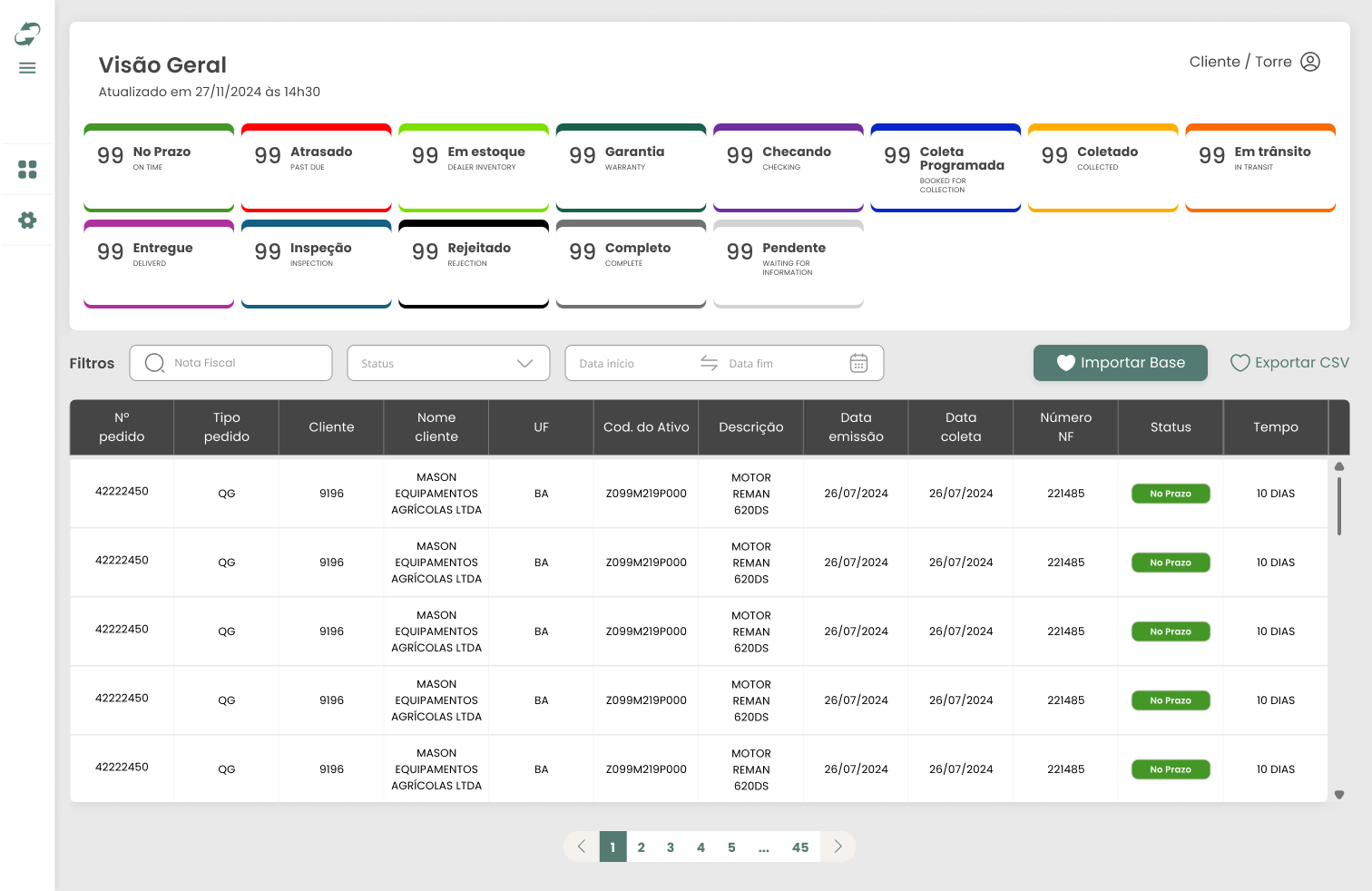
Existing interface used as the starting point for analysis and redesign.
From understanding the operation to building the new experience
My work involved understanding business rules, operational workflows and user needs to transform this context into a more intuitive and scalable platform.
Designing for different roles within the operation
One of the key decisions was structuring the experience around the roles involved in the logistics chain. Each profile has different goals, permissions and responsibilities within the flow.

Access mapping for user profiles linked to the operation.
Organizing a journey with multiple statuses and scenarios
The operation needed to support several asset statuses, such as on time, arriving, pending adjustments, scheduled pickup, collected, in transit, delivered, inspection, completed, delayed, in stock, rejected and warranty.
The redesign organized these statuses into a consistent visual logic, allowing users to quickly understand the current stage of the operation and the available actions.
Design decision
I used colors, filters, tabs, tables and visual states to improve quick scanning and decision-making in complex operational scenarios.
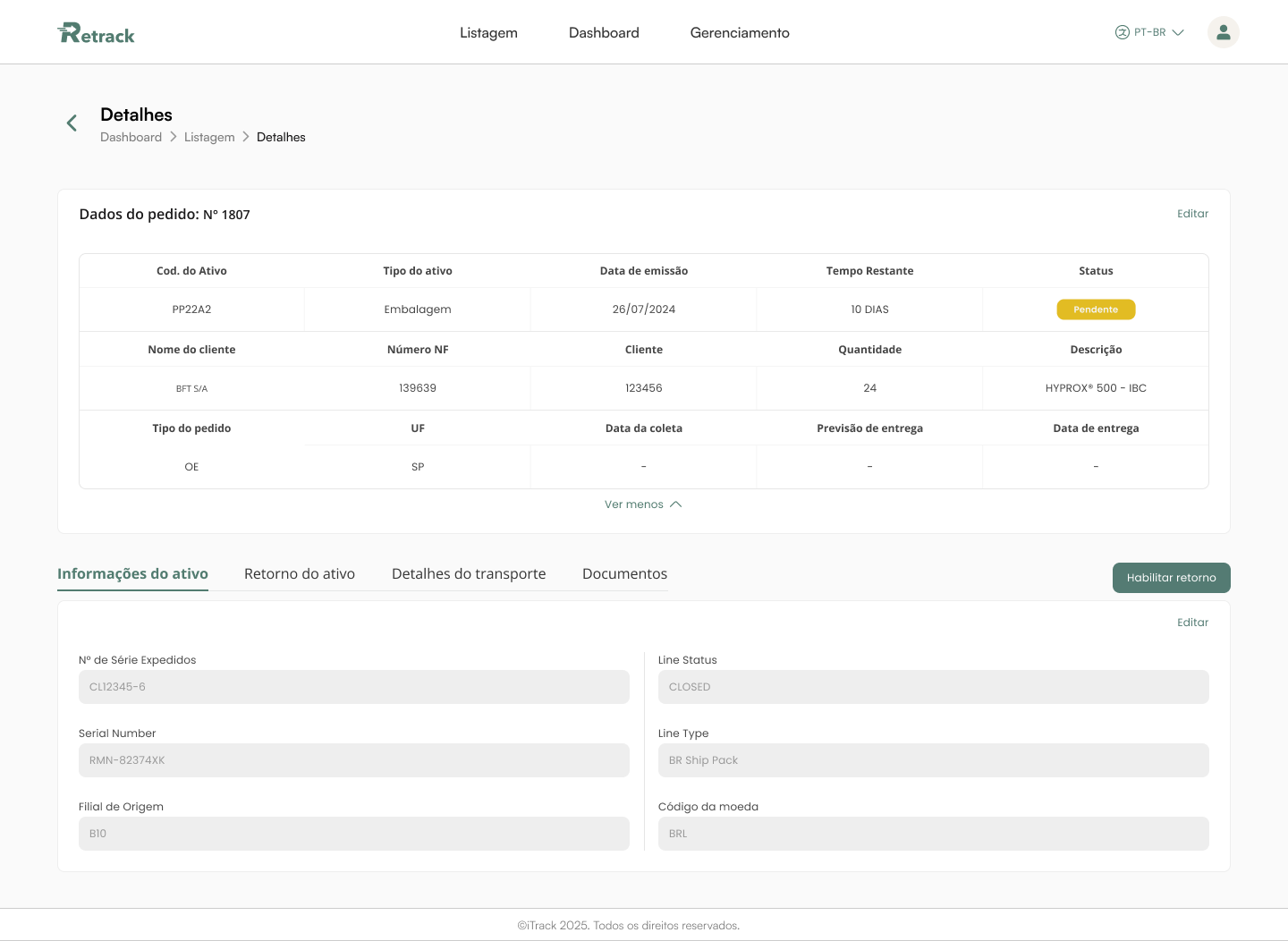
Control Tower workflow for asset management and operational actions.
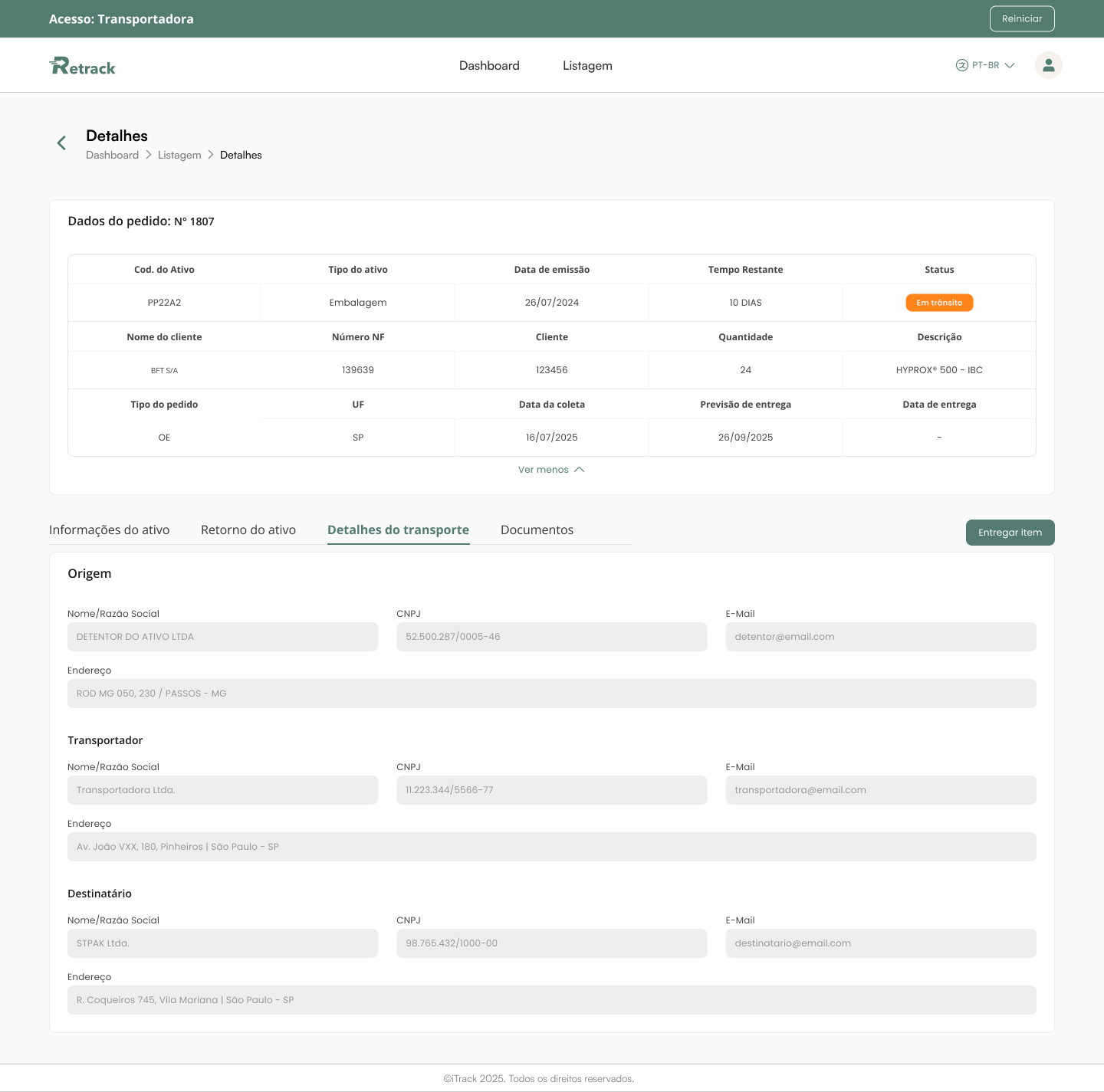
Carrier workflow, including approval, pickup and delivery stages.
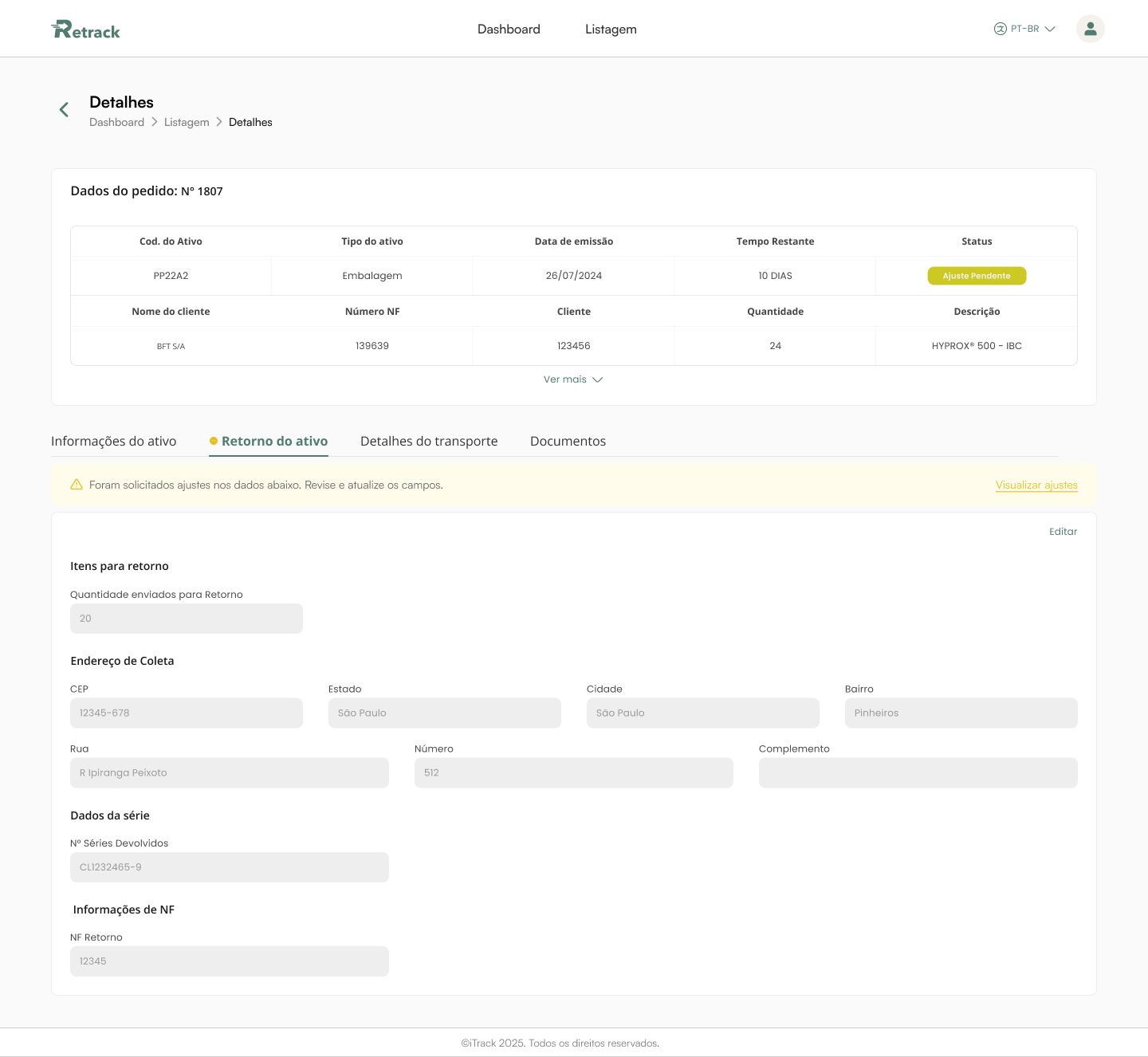
Dealer workflow, including asset return and tracking.
A flexible platform for different operations
Retrack was adapted for different client companies, including AGCO, Brenntag and AssetShift. Each operation had specific data structures, terminology, steps and responsibilities.
In Brenntag's case, for example, it was necessary to understand information coming from support spreadsheets, such as asset type, code, order, invoice, quantity, customer, return data and documents involved in the process.

Overview of the platform flow and its client-specific adaptations.
More clarity for tracking data, statuses and actions
The interface was redesigned to improve the readability of large volumes of information, simplify filtering by status and make actions more accessible for each user profile.
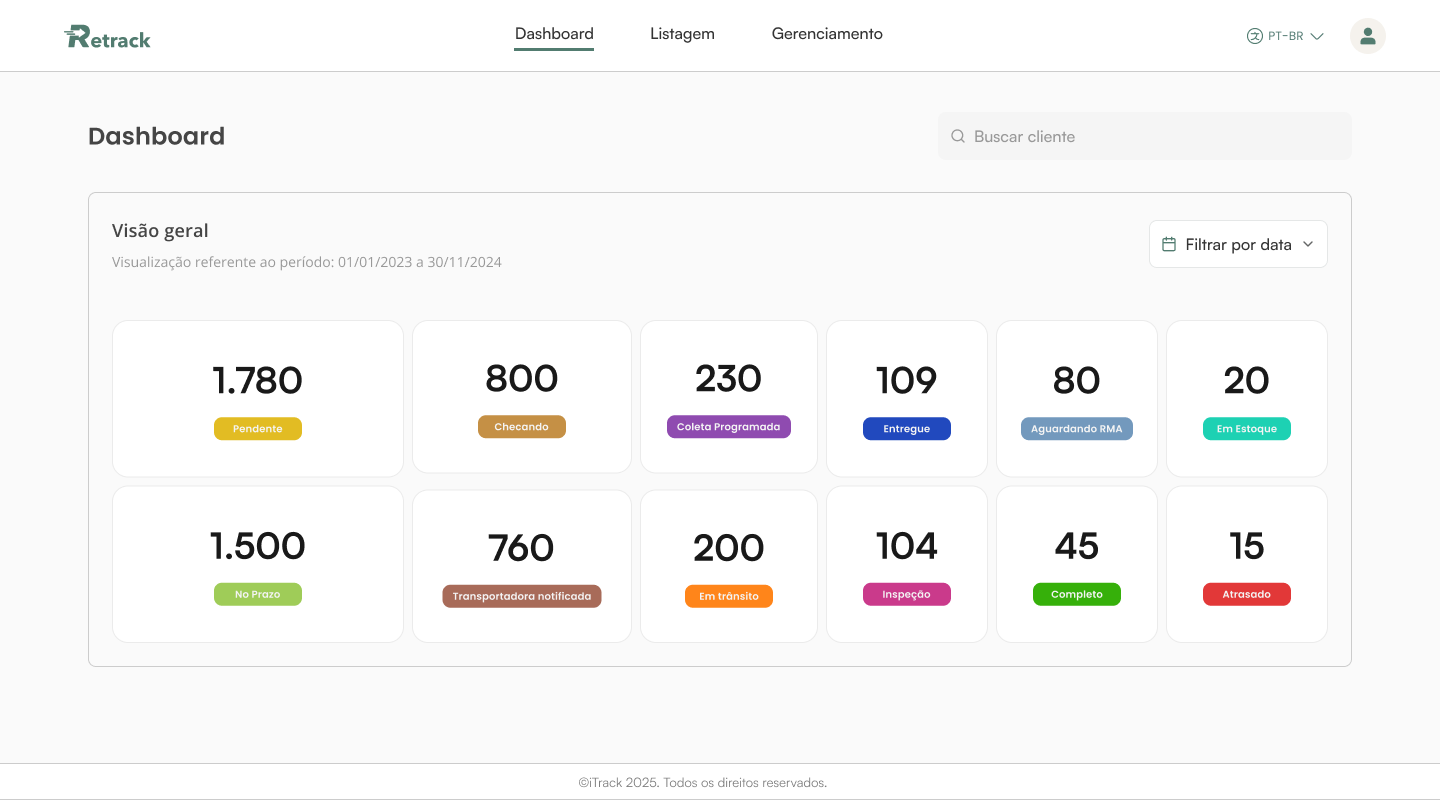
Dashboard with an overview of assets and operational status.
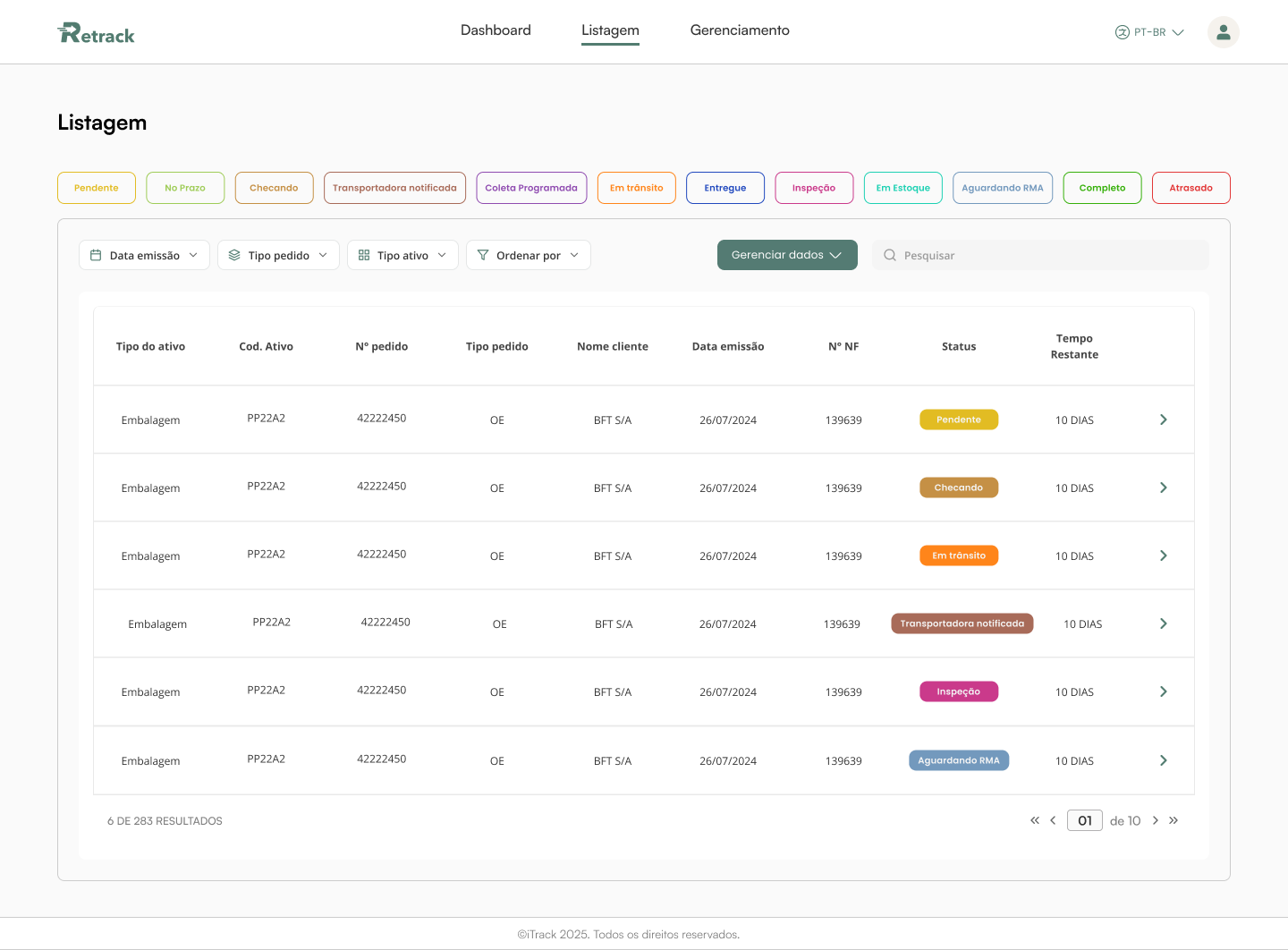
List view with filters, status tags and tracking actions.
Authentication, profile and account administration
Beyond the main operational flows, I also designed support screens for the platform, such as login, password recovery, profile setup and user data editing.
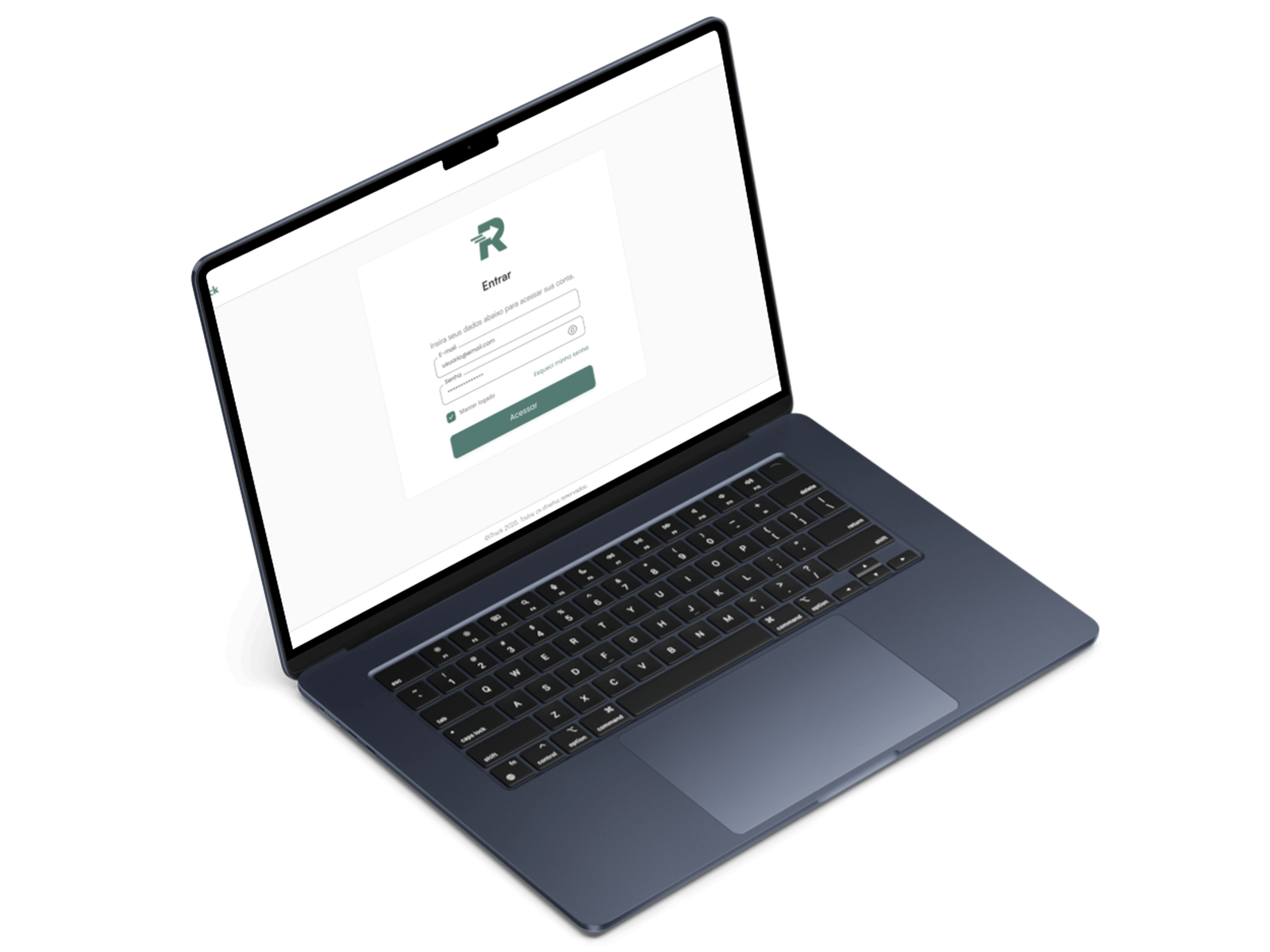
Login, password recovery and access creation flows.
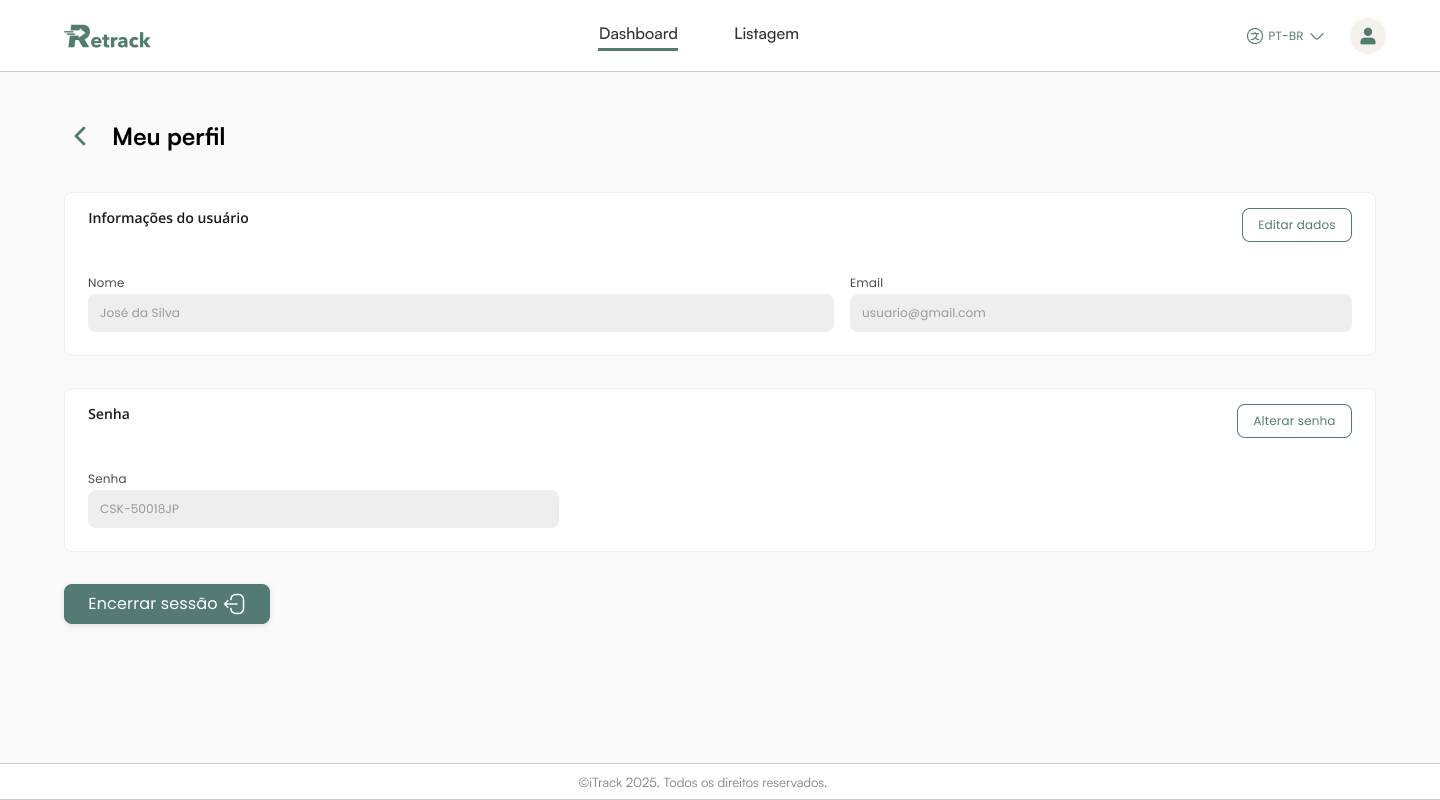
Profile flow including email editing, password change and session logout.
Creating consistency for a growing platform
To support product evolution, I organized visual standards and reusable components, ensuring consistency across different flows, user profiles and client-specific adaptations.
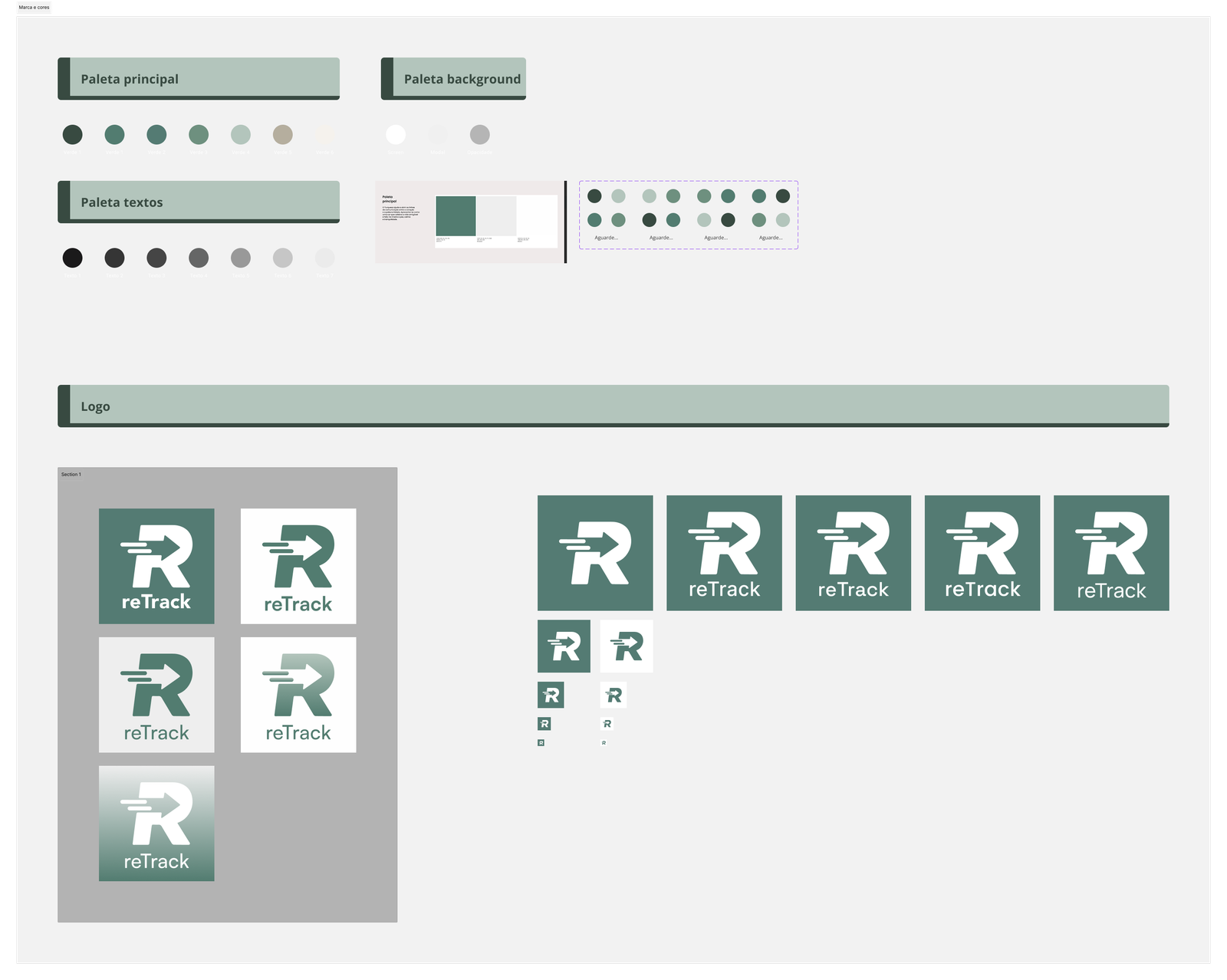
Brand studies, color palette and logo variations.
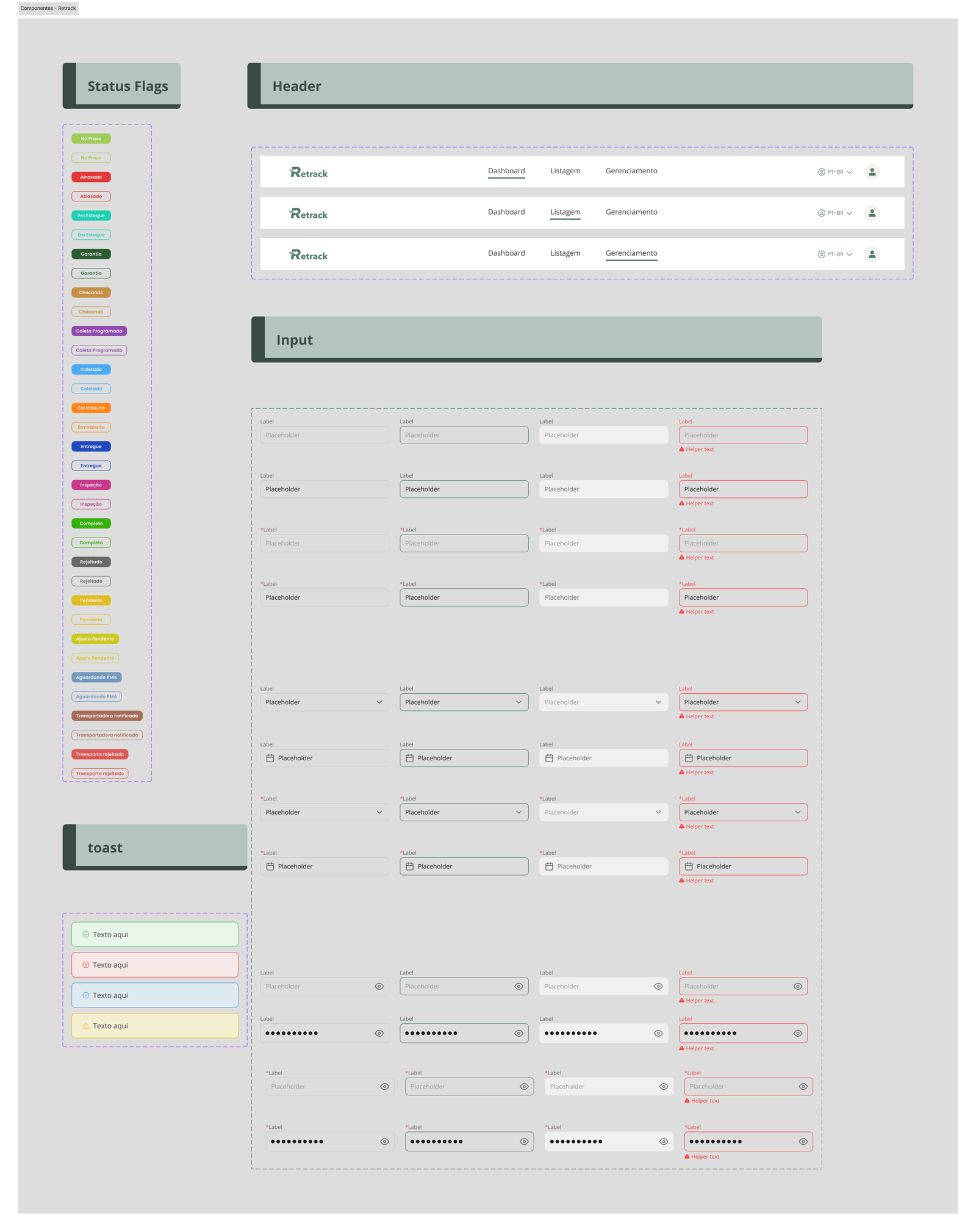
Components used across filters, tables, statuses, inputs and feedback patterns.
A clearer experience for complex logistics operations
Visual and structural transformation of a complex operational system.
Flows adapted for control towers, carriers, dealers and customers.
A visual and functional foundation prepared for different companies and operations.
What this project strengthened in my design practice
Retrack reinforced my ability to work on complex B2B products, where the experience needs to balance clarity, operational efficiency, business rules and different responsibilities across users.
It was also an important project for consolidating my perspective on legacy system redesign, componentization and adapting the same product foundation to different client contexts.
More projects
Explore other products and experiences I’ve designed.