
ScoreHub
Building a modular financial platform for credit assessment, customer verification and digital services management.
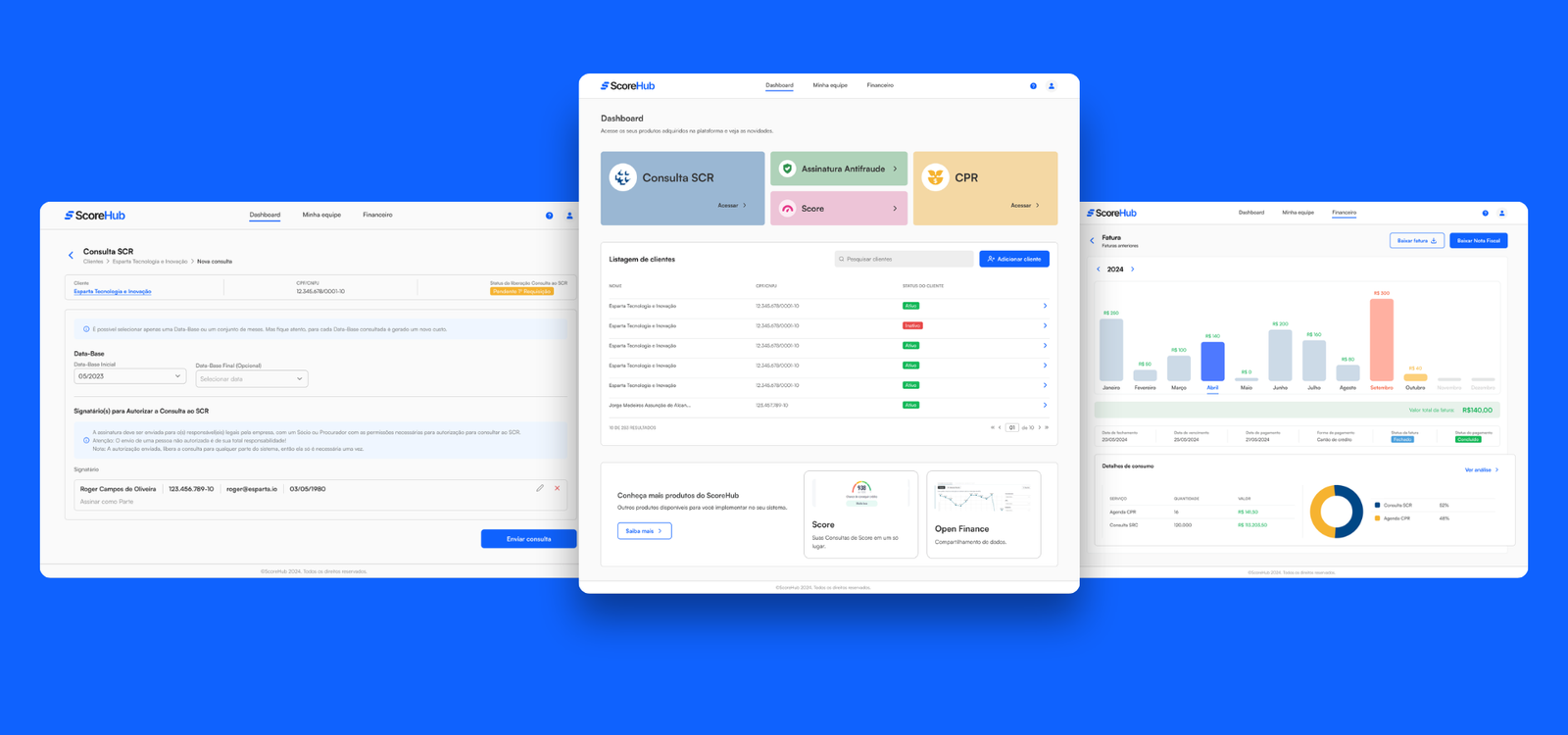
Overview
ScoreHub is a B2B platform designed to support companies in credit granting and financial capacity assessment for both individuals and businesses.
The solution centralizes services such as SCR Inquiry, CPR Agenda, Score, Anti-fraud Signature and financial management into a single digital environment, reducing the need for multiple tools and making complex financial processes more accessible to users.
As the sole Product Designer on the project, I contributed from the initial concept of the platform to the design of flows, interfaces and components that shaped the product experience.
Transforming financial complexity into a simple product experience
Companies that perform credit analysis need to gather information from different sources, request authorizations, monitor inquiries and handle sensitive regulatory processes.
ScoreHub’s challenge was to create a platform capable of centralizing these operations into one experience without compromising security, clarity or scalability.
The main challenge
This was not just about designing screens, but structuring a modular platform capable of supporting different financial products with consistency, usability and room for growth.

Initial platform mapping and organization of the first flows.
From strategy to interface
I worked as the sole Product Designer, translating technical requirements, business rules and regulatory information into flows that users could understand and operate with confidence.
Understanding a highly specialized market
Before designing the interfaces, I conducted research to understand the credit analysis market, financial platforms, digital signature systems and B2B SaaS products.
I analyzed references such as Serasa, digital signature platforms and financial systems to understand navigation patterns, industry language and opportunities for simplification.
- How can financial data be presented clearly?
- How can users be guided through regulatory workflows?
- How can different modules coexist within the same platform?
- How can the product be prepared for future expansion?

Initial layout studies and information organization.
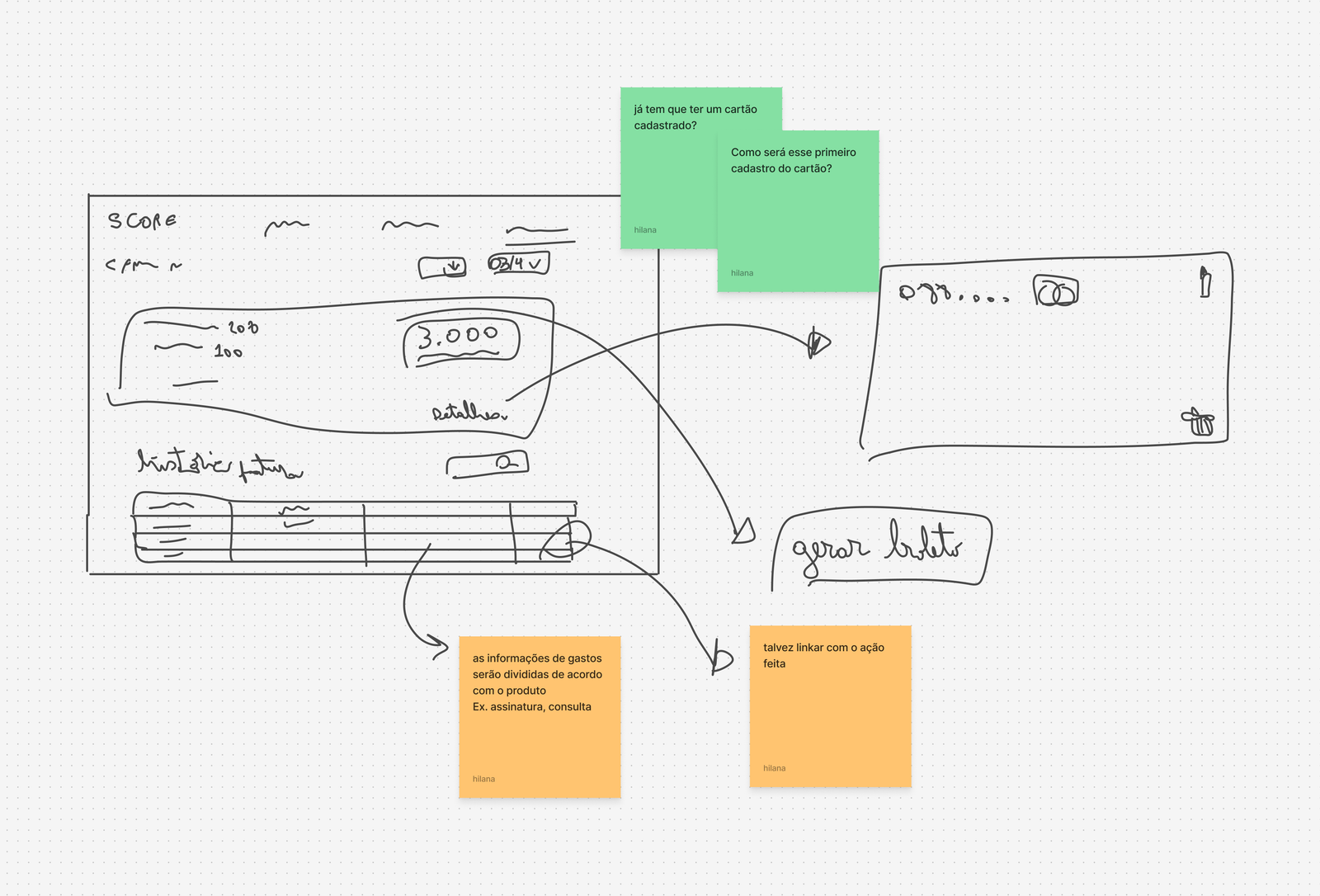
Plans, monetization and market reference studies.
A modular platform, not just a feature
The platform was structured as an ecosystem of financial services. Each module had specific goals, while sharing navigation patterns, components and interaction logic.
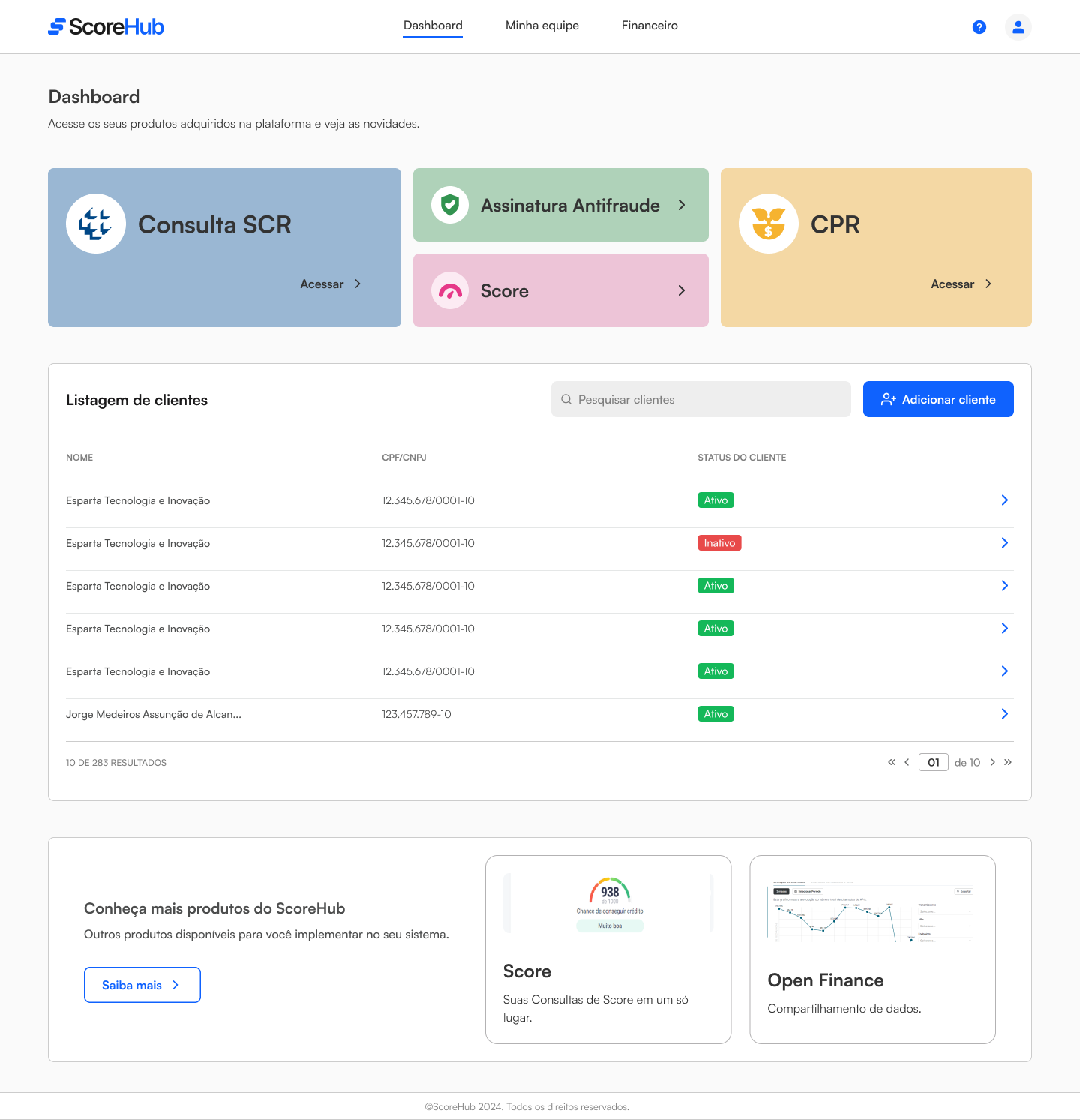
Main dashboard with access to products and customer listing.
SCR Inquiry
SCR Inquiry was one of the core modules of the platform and became used by real clients, including GiroTech.
The flow needed to include legal representative authorization, base-date selection, status tracking and inquiry submission, keeping the process clear even with regulatory requirements.
Design decisions
I used visual hierarchy, contextual messages, tracking statuses and progressive information organization to reduce uncertainty throughout the process.
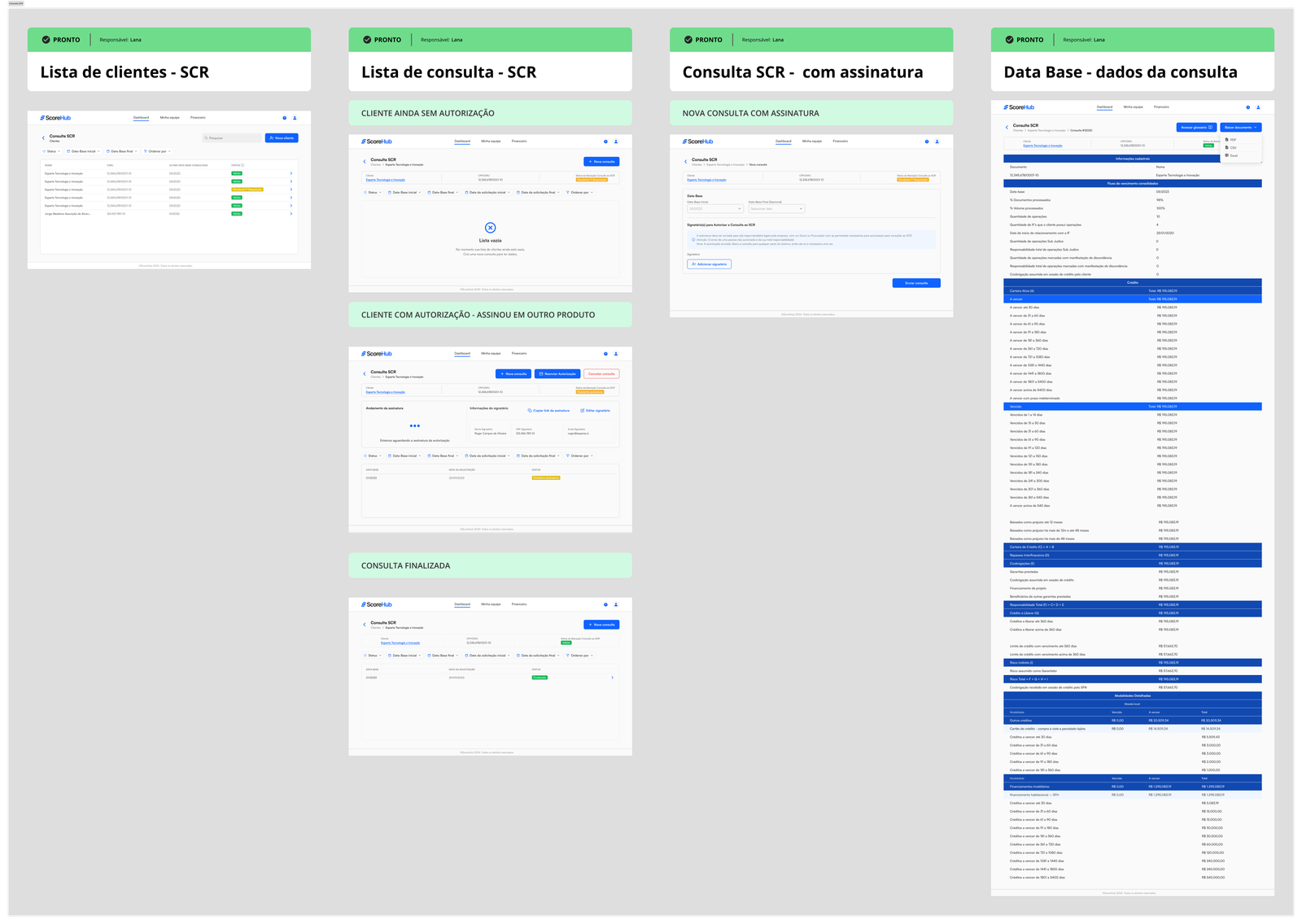
Complete mapping of the SCR Inquiry flow.
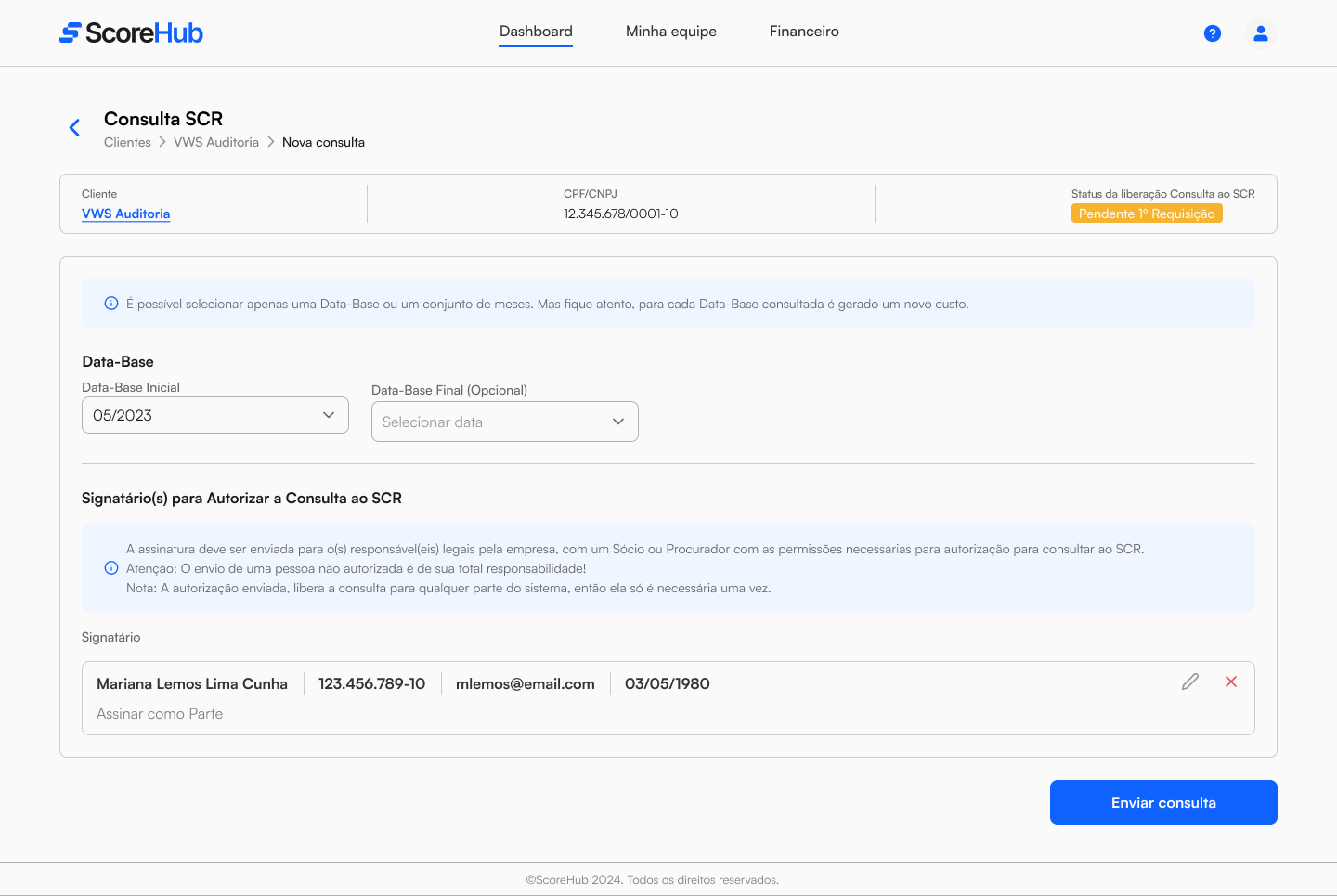
Inquiry setup screen and signer definition.
CPR Agenda
The CPR module was designed to simplify the consultation and monitoring of registered receivables, requiring an interface capable of organizing large volumes of financial information in a scannable and efficient way.
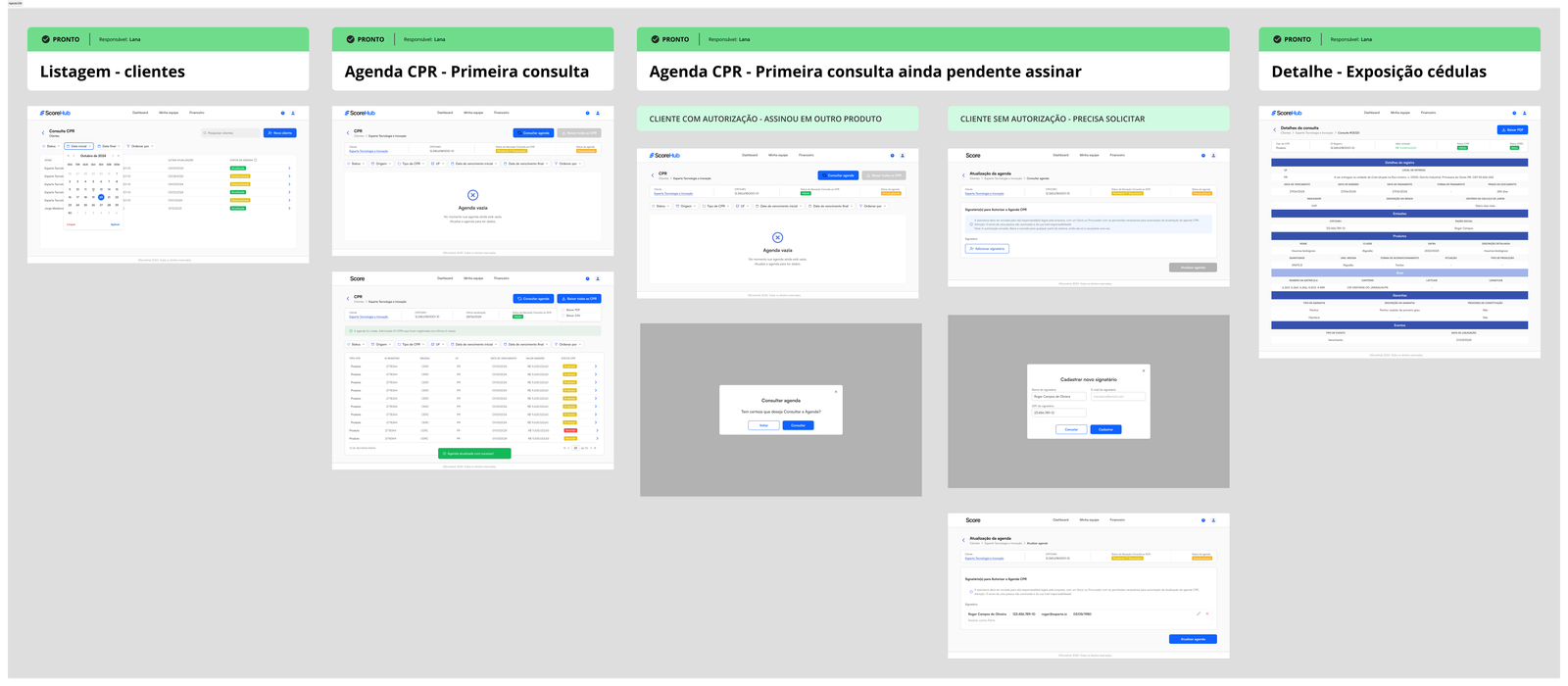
CPR Agenda flow including different statuses and usage scenarios.
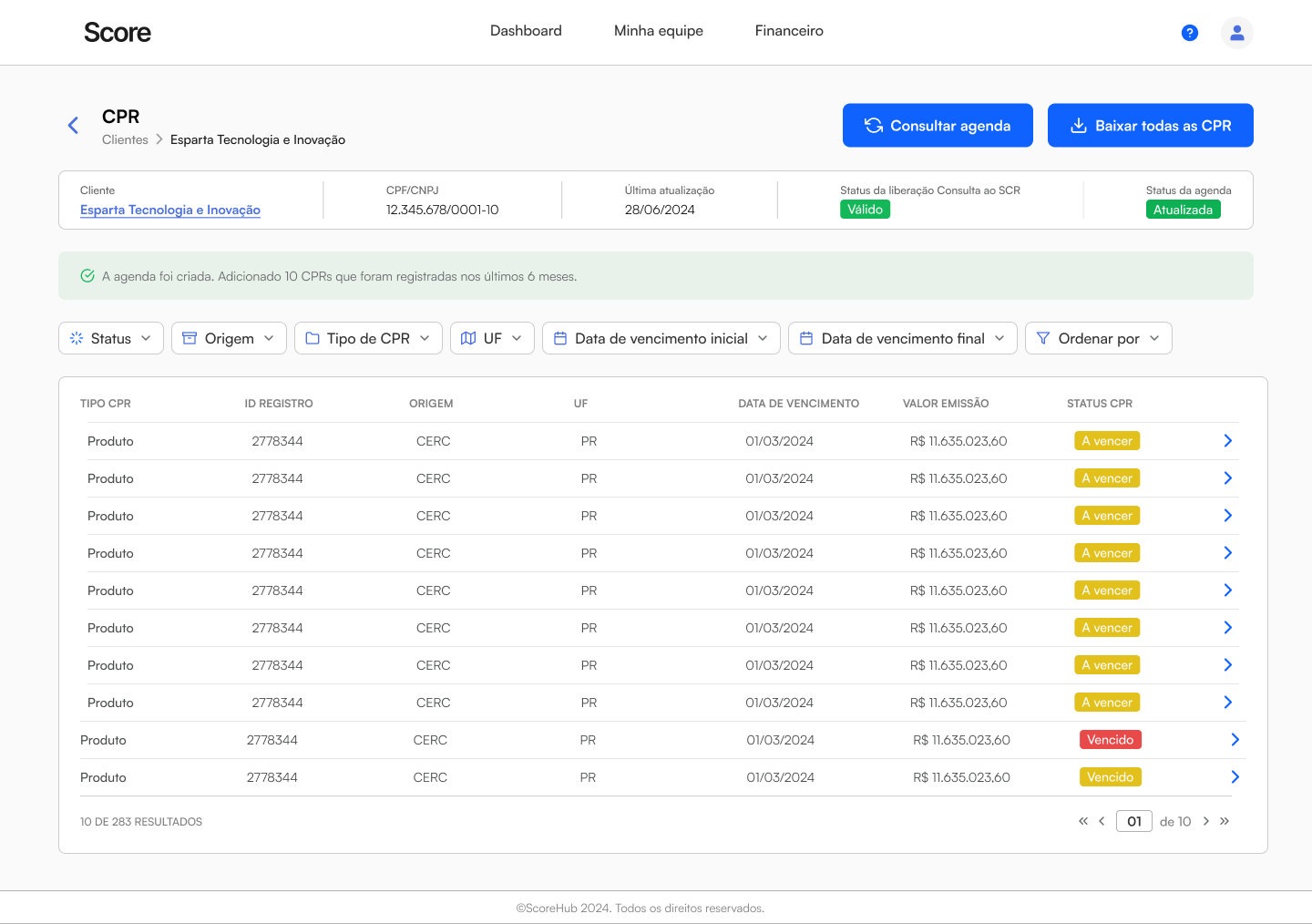
Table view with filters, statuses and financial information organized for analysis.
Financial Management & Platform Usage
Beyond financial inquiries, users also needed visibility into billing, service consumption and overall usage of contracted products.
The financial area was designed to present invoices, payment status, service consumption and visual indicators that help customers understand how they are using the platform.
Why does it matter?
In a B2B platform, financial transparency reduces uncertainty, improves predictability and helps customers better understand the value generated by the services they use.
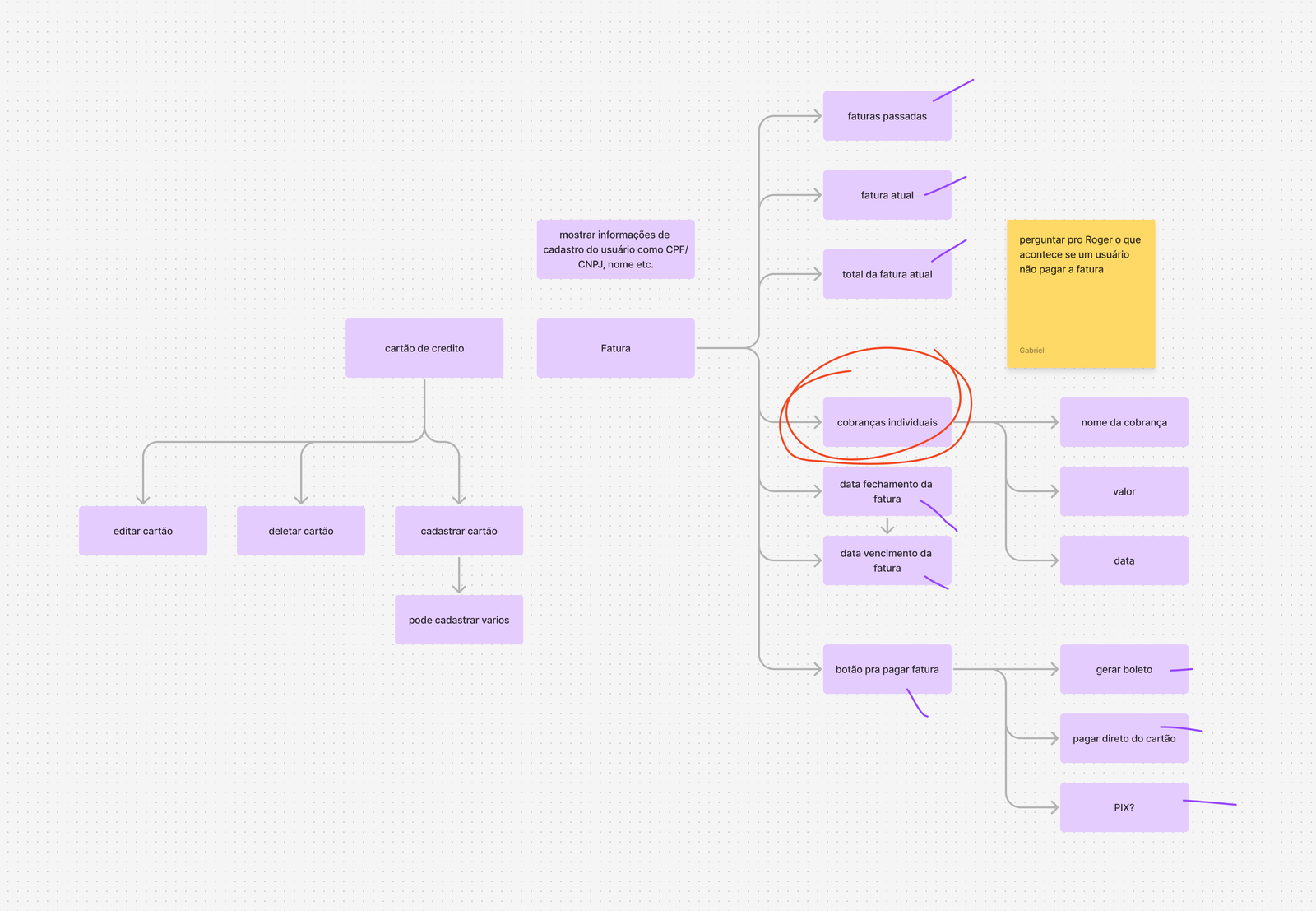
Mapping invoices, billing flows and payment methods.
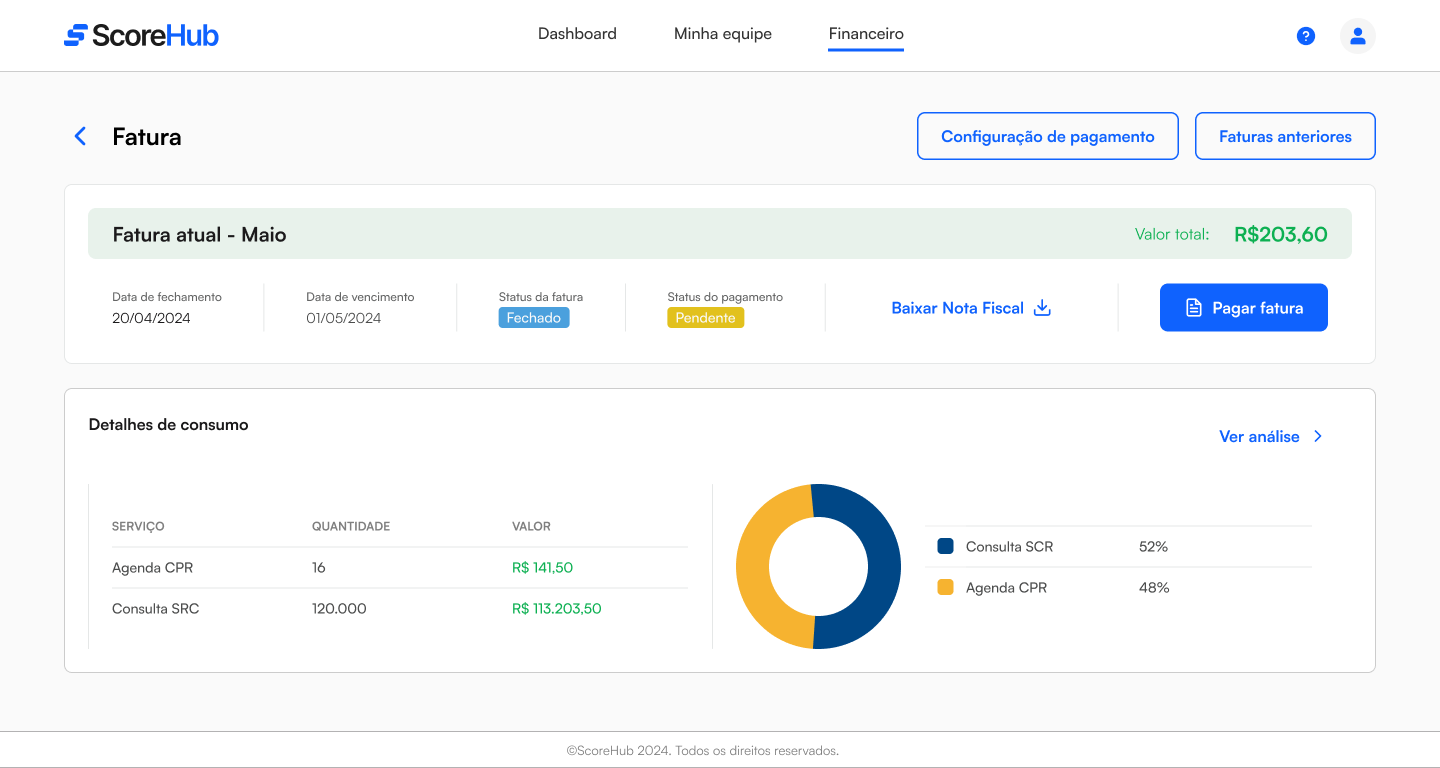
Invoice screen displaying service consumption and payment status.
Preparing the Platform for Daily Operations
In addition to financial modules, I also designed essential operational flows such as login, password recovery, user profile management and team administration.
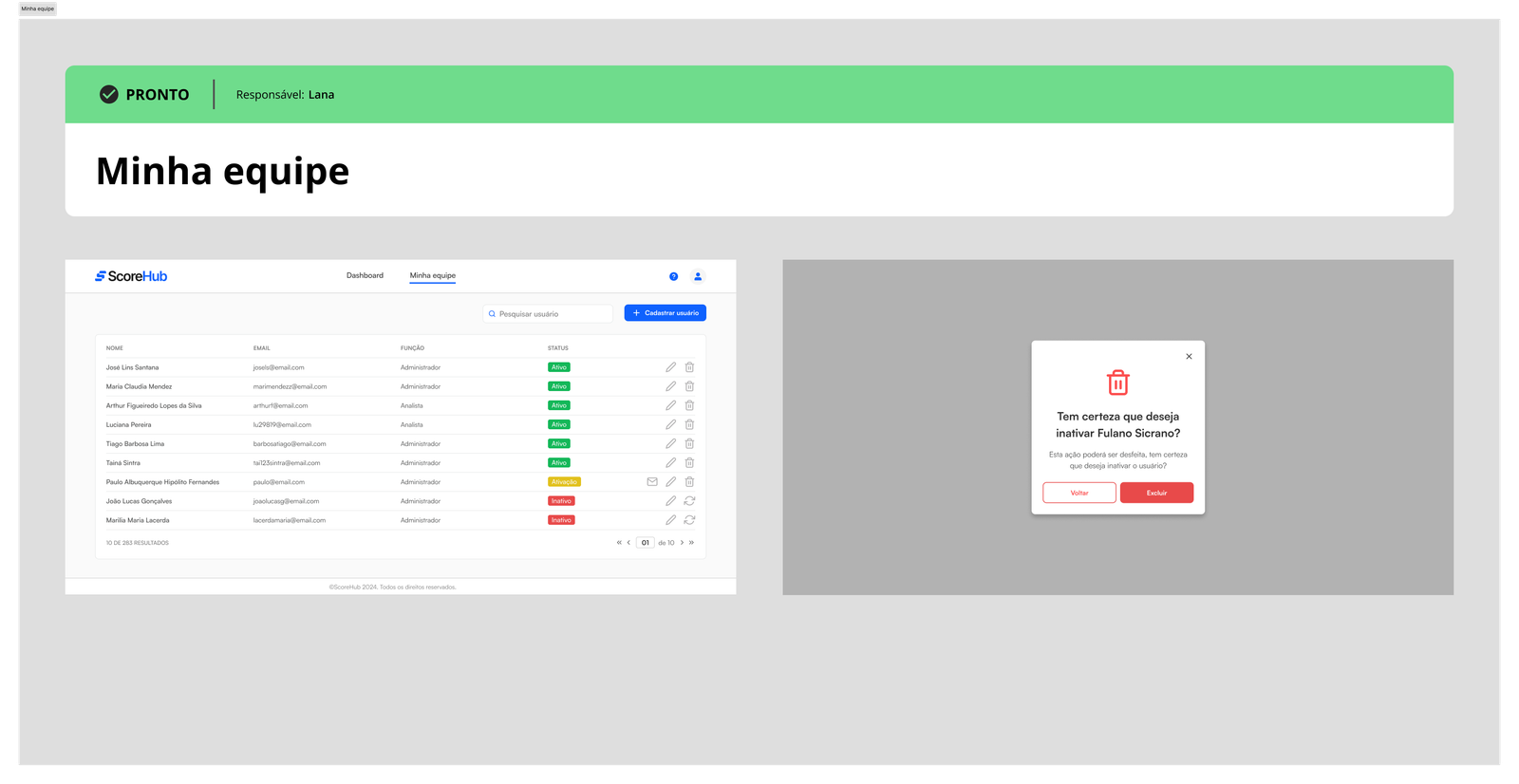
User management, permissions, invitations and access status.
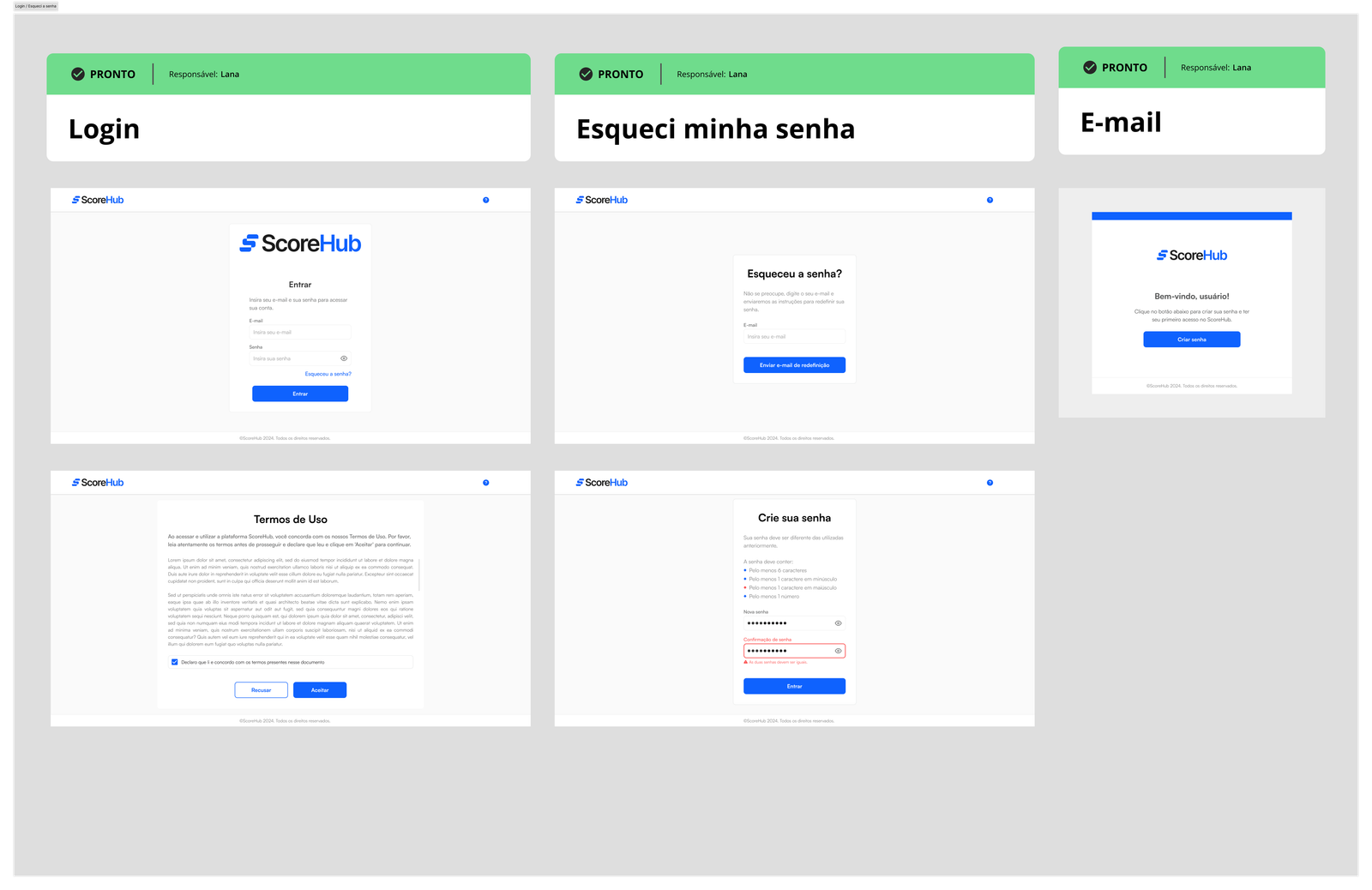
Authentication, terms acceptance and password recovery flows.
Building Consistency for Scale
As the platform expanded, it became essential to establish reusable components and visual standards capable of supporting the evolution of multiple modules and future products.
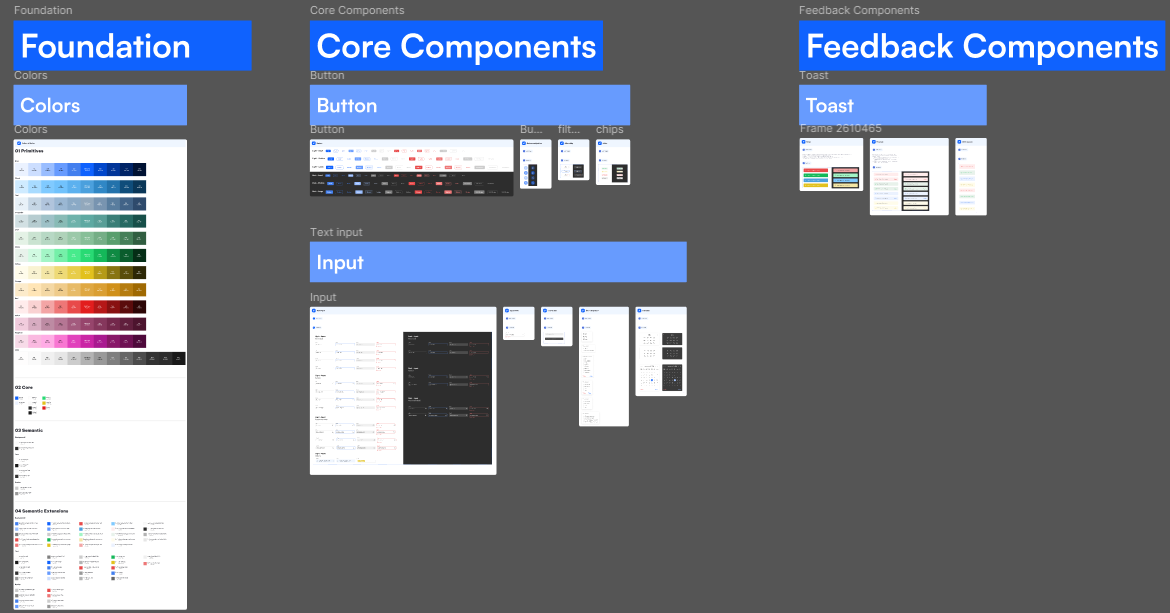
Foundations, core components and feedback patterns used across the platform.
From concept to a real-world product
The platform evolved from an initial idea into a product used by real customers.
The SCR Inquiry module became part of the operations of companies such as GiroTech.
The project established a visual and functional framework for future modules and services.
What this project strengthened in my design practice
Designing ScoreHub strengthened my ability to work in highly specialized environments, translating technical, regulatory and business requirements into accessible digital experiences.
The project also reinforced my product thinking, particularly around building scalable B2B SaaS solutions supported by modular architecture and a consistent Design System.
More Projects
Explore other products and experiences I’ve designed.